Unknown's avatar

About krjack4

Extension Agent for Horticulture Serving home gardeners and Green Industry professionals, including commercial fruit & vegetable producers. Advisor to: Christian County Master Gardener Association; Downtown Hopkinsville Farmers Market.

Microgreens

They are tiny, tasty, and trendy. Microgreens are also described as cute, but what are they? Not sprouts; not baby greens, but greens with fully developed cotyledon (first) leaves.

Anyone can grow microgreens in a kitchen window or greenhouse with a shallow pan and 3 inches of clean soil or a sheet of coconut coir. Seeds that you plant will need 4 or 5 hours of light daily within a temperature range of 65 to 75 degrees. Use only herb and vegetable seeds that are labeled for microgreens and have not been coated. Sow the seeds very thickly.

The best seeds to use are cabbage, broccoli, kale, radish, mustard, beets, carrots, chard, basil, cilantro, dill, fennel, parsley, kohlrabi, and arugula. Once planted, microgreens can be harvested in 10 to 14 days. Harvest once cotyledons are fully developed, or true leaves are just beginning to emerge. Larger seeds may take longer. During that time, they should be misted every day. The final product is harvested by clipping them with a pair of clean scissors. The shelf life on microgreens is short, so plan to use them quickly after cutting. The greens should be 2 or 3 inches tall.

Photo by Mikhail Nilov on Pexels.com

An advantage of microgreens is that they can be grown all year, making them a valuable recipe ingredient. They are enjoyed because they appeal to the senses, but they are valued because of their nutrient density. Past research on microgreens confirms them to be high in micronutrients, trace minerals, antioxidants, and vitamins C, K, and E. According to the USDA, the microgreen plant may contain as much as 40 times the nutrients as the mature plant. In recent years, extensive research has begun to determine if microgreens are a practical food source in space. They are also being considered for playing a role in diets that are tailored for specific diseases.
Use microgreens as a garnish for soups or desserts; or as an ingredient on sandwiches and in salads.

Source: Johnnie Davis, Marshall County Master Gardener

How to Read a Seed Packet

On Wednesday, April 5, the Horticulture Webinar Wednesdays presents How to Read a Seed Packet (and have better gardening success) with Sharon Flynt, Scott County Horticulture Agent. The webinar begins at 12:30 pm EST/ 11:30 am CST.

Register for the meeting here.

See what other webinars are coming this season here: https://kentuckyhortnews.com/horticulture-webinar-wednesdays/season-four/


Click here to view Season Three Videos. (2022)
Click here to view Season Two Videos. (2021)
Click here to view Season One Videos. (2020)

Or watch them all on our YouTube Channel: https://www.youtube.com/@HorticultureWebinarWednesday
If You Need to Cut Down a Tree – Do It In Winter

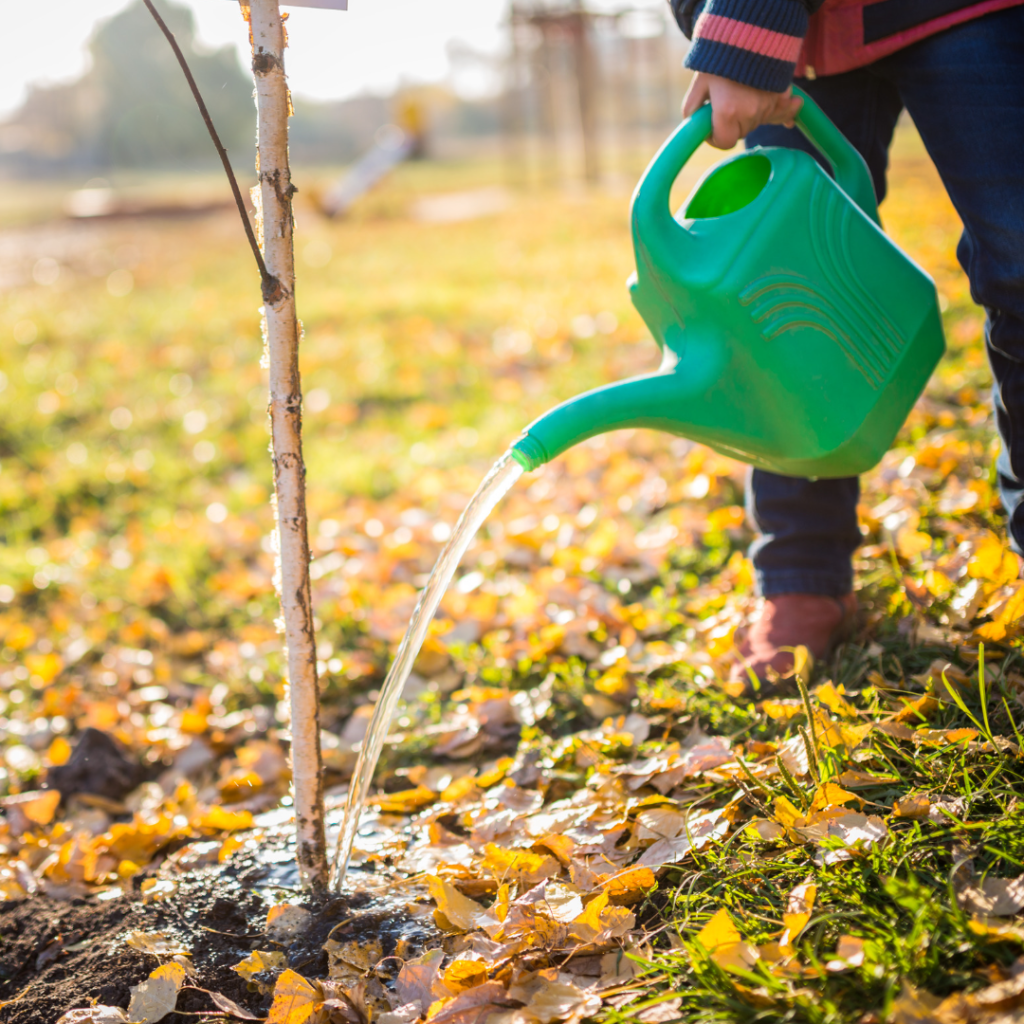
Trees are valuable components of our ecosystems, not to mention the cooling and other benefits they can provide around our homes. But sometimes you may need to cut one down. From a wildlife perspective, the best time to cut down a tree is in the winter. All else being equal, I prefer removing trees in the early to mid-winter, rather than later in the winter.

What Are Some of the Reasons to Cut Down a Tree?

There are many reasons why you might choose to remove a tree from your property. Some common reasons include:

  • It is a hazard tree which poses a safety risk to people or personal property. If it is a safety risk, it doesn’t matter what time of the year it is. The tree should be removed to make the area safe.
  • The tree isn’t a safety risk – yet, but you can tell that it is going to be and you’d rather take care of the problem before it becomes critical. Whether you can wait until winter will depend on the circumstances.
  • You want to manage your property for a prairie / grassland habitat, a savanna habitat, or an open woodlands habitat. Prior to European settlement, much of the eastern U.S. was a complex matrix of habitats ranging from open prairie / grasslands to closed canopy forest. Today, grasslands and shrublands are some of our most rapidly disappearing habitats as they are developed or allowed to grow up into forests.
  • You want to do a timber harvest.

Why Is Winter the Best Time to Remove Trees?

During the spring and summer, trees may be used as maternity or nesting sites. We all know that many birds nest in trees. Many of our bats also form maternity colonies in tree cavities or under loose bark. Baby birds and baby bats can’t fly. Cutting down a tree in the spring or summer risks killing any baby birds or baby bats in the tree.

Photo by Nikhil Joseph on Pexels.com

In the winter, we don’t have any nesting birds or bat maternity colonies to worry about. Few, if any, of our bats hibernate in trees so you aren’t likely to disturb any bats by cutting down a tree during the winter. Birds may roost among the tree’s branches or in small cavities, but those are transient roosts. Winter birds can, and often do, move from one place to the next. So, if a winter roost disappears, the birds will just move to another. However, many of our owls and some of our hawks will begin nesting in late winter or very early spring, which is why I prefer to remove trees in early to mid-winter, if possible.

Summary

There are many reasons why you might need to cut down a tree. Those reasons will vary from person to person and may include safety, economic, and habitat management considerations, just to name a few. Cutting trees in winter, especially the early to mid-winter, will typically have the fewest negative impacts on your local wildlife.

Source: Shannon Trimboli,
Helping you discover and appreciate the nature around you.
https://shannontrimboli.com/

Common Problems and Pests of Popular Garden Vegetables

Many Kentucky gardeners grow tomatoes, peppers, eggplant, and potatoes for their own use or for sale in local farmer’s markets. Pests are sometimes challenging to identify and even more challenging to manage.  

The University of Kentucky College of Agriculture, Food and Environment advocates for a sustainable approach to managing pests by combining biological, cultural, physical, and chemical tools in a way that minimizes economic, health, and environmental risks. A key part of that is to continually scout and monitor your garden to identify problems before they result in a significant loss. 

Photo by Markus Spiske on Pexels.com

The UK Cooperative Extension publication ID172—An IPM Scouting Guide for Common Pests of Solanaceous Crops in Kentucky—may help you identify common pests. The publication has a variety of photographs that show exactly what to look for in your crop.  

Some of the items the publication covers include: 

  1. Physiological and nutrient disorders such as vivipary, gold fleck, catfacing, zippering, sunscald, blossom end rot, blotchy ripening, yellow shoulder, and white core. 
  2. Insect pests such as aphids, leafminer, greenhouse whitefly, silverleaf whitefly, tobacco flea beetle, potato flea beetle, margined blister beetle, stink bugs, leaf-footed bugs, western flower thrips, two-spotted spider mites, Colorado potato beetle, tobacco hornworm, pepper maggot, beet armyworm, yellow-stripped armyworm, tomato fruitworm, European corn borer.  
  3. Tomato, pepper, eggplant, and potato diseases and management.  
  4. Herbicide injury.  
  5. A list of resources for further study.  

    To view the publication, visit http://www2.ca.uky.edu/agc/pubs/id/id172/id172.pdf.  
     

    Source: Ric Bessin, UK Extension Entomologist, Nicole Gauthier, UK Extension Plant Pathologist 

Leave Your Fall Leaves for Pollinators and Wildlife

Think of fall in the eastern U.S. and fall foliage is likely to be high on the list of things that come to mind. People will drive for hundreds of miles to admire a forest ablaze in bright red, orange, and yellow leaves. More than one vacation, wedding, or other special event is planned each year with the hopes of hitting peak fall color in an area. Kids love tromping through the fallen leaves and making them crunch as loud as they can. And I’ve yet to meet anyone who enters the woods during the fall and proclaims how ugly the woods look with so many leaves on the ground.

Continue reading

American Mistletoe – A Holiday Plant Enjoyed by Pollinators and Wildlife

It’s hard to miss the basketball-sized clusters of green leaves decorating the bare upper branches of trees as they reach up to the winter sky. Those basketball-sized clusters of leaves are most often mistletoes. There are several different species of mistletoe in North America, and even more in other parts of the world. Some prefer conifers. Others prefer deciduous hardwoods. Probably the most common species that prefer hardwoods in the eastern half of the U.S. is the American mistletoe, also known as the oak mistletoe (Phoradendron leucarpum). This is the species I’m most familiar with and that decorates the trees on our farm and in the surrounding region.

Continue reading

Conserve the Canopy

Why trees?

Trees are often an overlooked asset in the home landscape. Many homeowners fail to realize that their trees can translate to real dollars when it comes to real estate value. Studies have shown that the presence of mature trees in a well-maintained home landscape increases property values by 7%, on average, over comparable properties without trees. This benefit extends beyond the property line.

Continue reading