
All the mechanisms of life are represented in a garden: respiration, nutrition, circulation, reproduction and maturation. As such, it’s a perfect science laboratory where students can hone their math and observational skills and creativity.
Continue readingCategory Archives: Vegetables
Bring Your Garden Inside
If the thought of facing a long winter without straight-from-the-garden freshness makes you sad, weep no more. It’s easy as tomato pie to grow your own produce indoors.
There are a number of indoor gardening systems on the market today. They range in price and require anything from 2 square feet in space all the way to a multi-tiered 5-feet wide rack of shelving and grow lights. But if you don’t have the money or space to invest in one of these systems, don’t worry. There’s plenty you can do without them.
Continue readingGrowing Vegetable Transplants
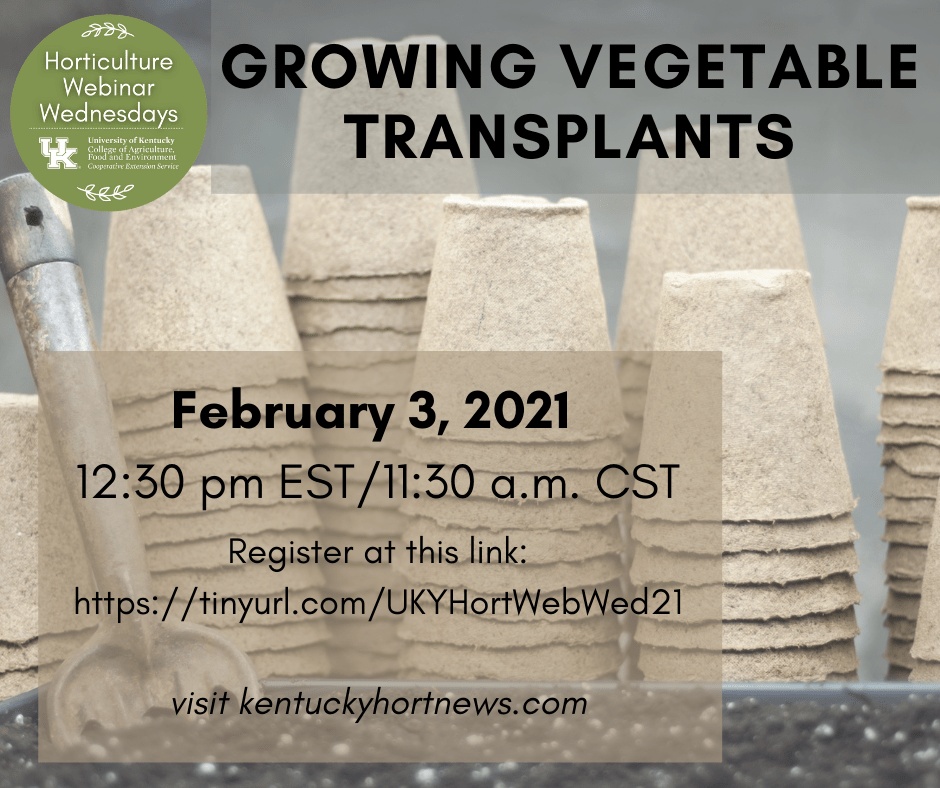
On Wednesday, February 3, the Horticulture Webinar Wednesdays presents a training on Growing Vegetable Transplants with Annette Heisdorffer, County Extension Agent for Horticulture in Daviess County. The webinar begins at 12:30 pm EST/ 11:30 am CST.
Register for the meeting here: https://tinyurl.com/UKYHortWebWed21
See what other webinars are coming this season here: https://kentuckyhortnews.com/horticulture-webinar-wednesdays/season-two/
View Season One webinars here: https://kentuckyhortnews.com/horticulture-webinar-wednesdays/season-one/
Growing Microgreens
Microgreens are ‘baby plants’, growing to only 1-3 inches tall when harvested. Reaching the harvest stage can take anywhere from 1-3 weeks, depending on the type. They can add color, texture, and interesting flavors to meals. Additionally, research has shown microgreens generally have higher concentrations of vitamins than the same plants grown to maturity. They can easily be grown indoors at home and are a great way to get your greens over the winter!
Continue readingAutumn Vegetable Gardening
Did your plans for a summer vegetable garden not work out? Did you lose track of time and never got around to planting a summer garden? Did you go on vacation to come back to a weedy mess that you just didn’t have the energy to correct before it was too late? If you answered yes to any of these questions it’s not too late to get homegrown vegetables from your own backyard this season! Continue reading
Victory Gardens
Even with the current events going on, we are lucky as Americans to have a stable food supply system. Many of us garden as a hobby and are able to supplement some of our normal groceries with things we have produced in our own gardens. In the early 1900’s many families solely depended upon the gardens they grew in their own backyards. During the First and Second World Wars these backyard gardens played a much bigger role in the battle against food insecurity. Continue reading
New Fruit and Vegetable Varieties for the New Decade
It’s OK to have a few good standbys when it comes to the varieties of vegetables and fruits that you grow. But every once in a while, a new variety comes out that you just have to try. Here are a few new (and newish) varieties. Continue reading
Making a Difference, One Peel at a Time
Yes, there is a reason why we should all be composting. According to the EPA, 30-40% of all available food in the US is wasted. Over one fifth of discarded material in landfills is believed to be food. Sadly, the third largest human related methane emission is from landfills. Continue reading
Can I Garden over my Septic System?
As we start to think about gardening and lawn care this year, one question may pop up: Can I garden on my septic system? Well, there are a couple of questions to consider:
- Can a garden be contaminated by bacterial and viral hazards which may be found in septic drainfields? A properly operating septic system will not contaminate the soil with disease organisms, but it can be difficult to tell if the system is working at optimum efficiency. Also, the soil type can make a difference. Clay like soil will eliminate any organism within a few inches of the system, while a sandy soil could allow for movement of bacteria several feet.
How does popcorn pop?
Did you know that the average American eat 68 quarts of popcorn a year! Not only is popcorn a delicious snack, but is also nutritious since it is considered a whole grain. Of course if you slather butter on it, the nutritional benefits may be negated. Continue reading
You must be logged in to post a comment.